Task management
system for shift‑based environments
Challenge
At a gym, trainers work in rotating shifts while caring for the same members over time.
This creates gaps in continuity of care, especially for complex tasks that require long‑term follow‑up, such as updating a training plan or monitoring a member’s progress.
Over time, these gaps affect the member experience and increase churn.
The challenge: design a task management system that maintains continuity of care in a shift‑based environment.
Approach
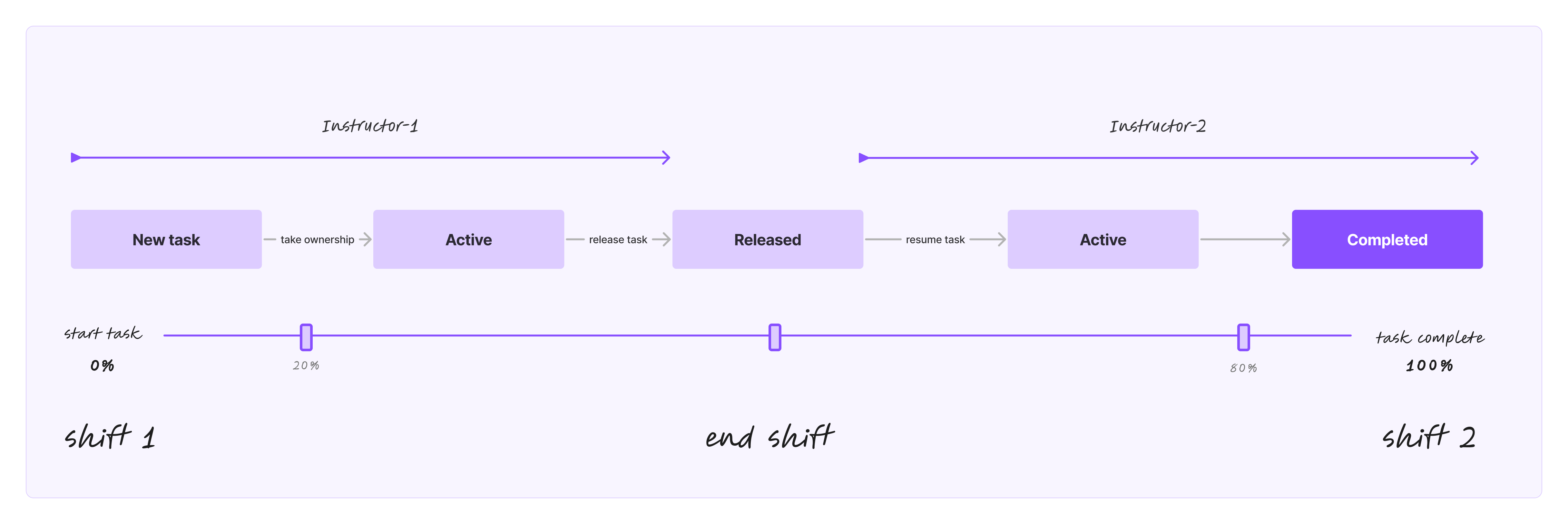
To maintain continuity of care in a shift‑based environment, we needed to decouple tasks from their owners and enable ownership handoffs at key friction points throughout the shift.
We mapped where handoffs were most likely to break down.
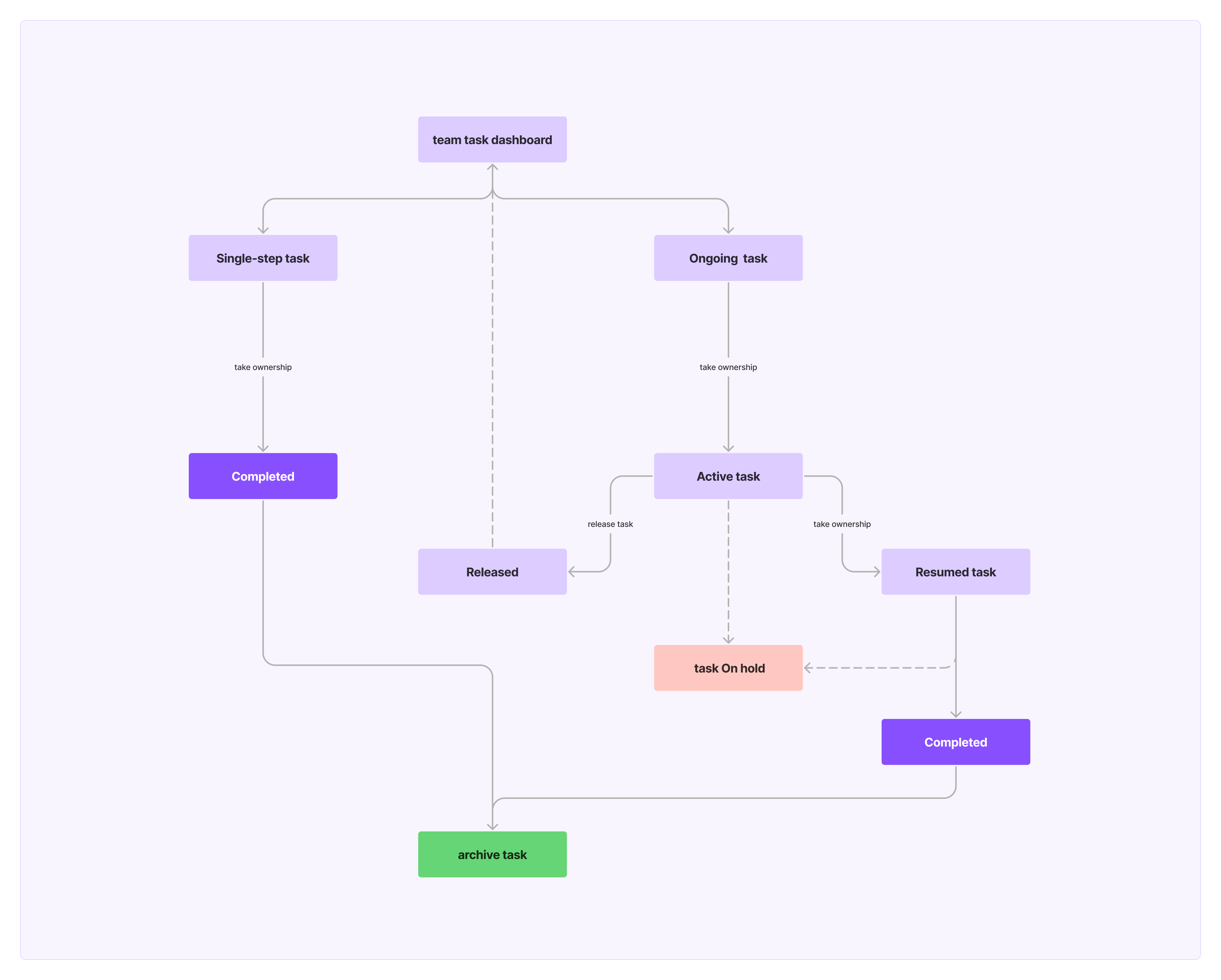
From there, we built a state model and ownership timeline that keeps tasks progressing through every shift change.
Additionally, we mapped task types and distinguished between short‑ and long‑running tasks to improve response times for members.
Solution
A task system that separates status, ownership, and visibility, allowing tasks to move between trainers even when shifts change, without compromising the member experience.
Research
[TBD — detail body]
Mapping
[TBD — detail body]
Prototyping
[TBD — detail body]
Testing
[TBD — detail body]
Handoff
[TBD — detail body]
Key Design Decisions
Separating state from ownership
To enable continuity in trainee care, we decoupled the task’s state from its current owner and designed smooth handoffs between shifts.
As a result, tasks continue where they left off rather than restarting with each trainer.
Separating visibility from action
All trainers can see all active tasks — but only the owner can act on them.
This lets trainers understand a trainee’s status without interrupting active care.
Explicit release and reclaim actions
Trainers can release a task, giving the team flexibility while maintaining continuous follow‑up for the trainee.
Impact & outcomes
Built a task management system from scratch for a shift‑based environment, including state logic, ownership model, and task types.
A close design‑to‑code approach and collaboration with the CTO allowed us to pressure‑test handoff scenarios and complex behaviors before full implementation, aligning design and development from the start.
In the pilot, we observed more consistent care tracking and fewer tasks falling between shifts, paving the way for notification and alerting logic in the next phase.